

Advancing Automotive Surface Preparation Through Abrasive Science and Process Control
Achieving a consistent, high‑quality surface finish prior to the application of paint depends on much more than the technician skill alone. The science behind abrasive minerals, the construction of each disc, and the processes used in the body shop collectively determine the cut rate, surface uniformity, and the predictability required for high‑volume repair work. As 3M’s abrasive technologies continuously evolve with the core principle of addressing long‑standing issues such as inconsistent finish quality, variable disc life, and rework due to improper grit selection, shops can make informed product choices with disciplined surface‑preparation workflows.
The Science Behind Abrasive Performance
At the core of every abrasive is the mineral grain. Its composition, shape, and fracture behaviour directly affects cut speed and finish quality. Traditional minerals tend to dull as they wear. In contrast, precision‑shaped minerals maintain sharpness by fracturing in a controlled manner. This self‑sharpening characteristic enables a more uniform scratch pattern across the panel being prepared, while also producing a predictable cut rate, which is especially important for modern automotive substrates.
Bonding and resin systems also influence quality. Stronger bonds maintain mineral spacing, helping the abrasive cut cleanly and resist loading. The backing contributes to edge retention and uniform contact with the panel, reducing the risk of pressure points during the sanding process.
For body shops, this evolution in abrasive construction translates to fewer disc changeovers while providing more consistent performance from start to finish.
Solving Common Body Shop Challenges
Shops routinely face recurring issues that abrasive selection can address:
- Slow cut rate on modern coatings: Harder, more resilient factory finishes can cause traditional abrasives to wear quickly or glaze over the surface. Precision‑shaped and engineered minerals on the disc, improving efficiency during defect removal or panel preparation by maintain cutting edges longer.
- Inconsistent finish quality across technicians: Variability in pressure, stroke pattern, or dwell time can produce unpredictable scratch depths and finishes. Engineered abrasives minerals incorporated onto a disc aid in producing a uniform cut, while helping to reduce technician‑to‑technician inconsistency.
- Loading during sanding operations: loading, especially point loading on a disc, leads to pig tails on the substrate, that are generally coarser than the grade being used, which can come through post painting. Stearate coatings and optimised mineral spacing help reduce loading on the disc.
- Rework caused by improper grit jumps: Moving from coarse to fine grits too quickly can leave deep scratches that later telegraph through the paint. A structured progression minimises the risk, generally you do not want to move more than 2x the current grade. For example, if the current grade is 180, then your maximum grade jump would be 360. As there are no 360 grades in the market, you need to drop to a 320-grade disc to maintain the rule.
Optimising the Surface Preparation Process
Process control is essential for reducing both variability and rework. Shops can improve consistency through:
- Correct abrasive selection: Choosing minerals matched to the substrate and coating ensures predictable removal without overheating or micro‑gouging.
- Defined grit progression: A disciplined sequence ensures that each step removes the scratches from the previous one. Even small deviations, such as skipping an intermediate grit, can lead to unnecessary sanding time and post‑paint defects.
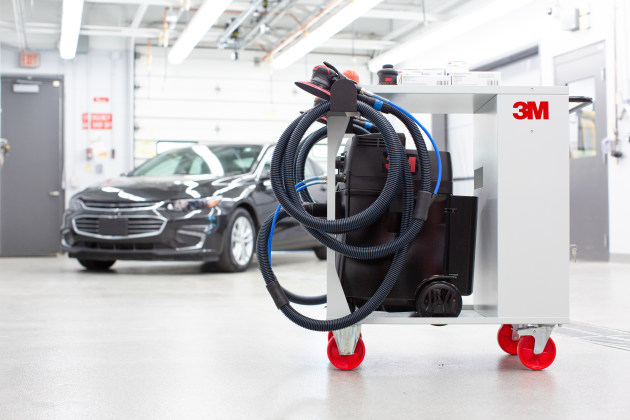
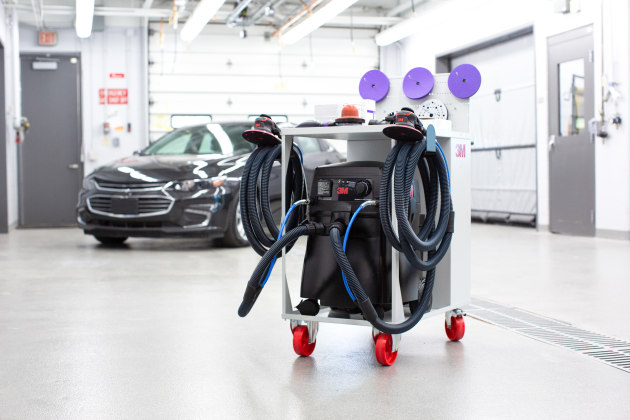
- Equipment compatibility: Abrasives perform best when paired with properly maintained tools. Vacuum‑enabled systems reduce loading and temperature buildup, extending disc life and improving finish uniformity.
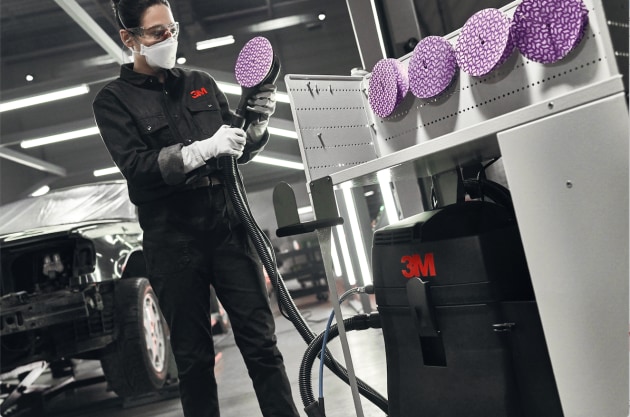
- Operator technique: Maintaining consistent pressure on the random orbital sander prevents premature edge wear and uneven cut. Training on force control and disc management yields measurable improvements across teams.
Understanding Abrasive Life‑Cycle and Durability
Abrasive performance naturally changes over the life of a disc. Several factors influence how long a disc maintains optimal cut:
- Mineral fracture behaviour: Precision‑shaped and engineered grains fracture predictably, extending usable life while maintaining a uniform scratch pattern. Conventional minerals may dull more quickly, resulting in reduced cut rate and more heat generation.
- Loading and heat buildup: Excessive heat accelerates binder degradation. Proper dust extraction and moderate pressure allow the abrasive to operate within its intended temperature range.
- Backing integrity: Backings maintain consistent mineral support. Once the backing fatigues, scratch patterns can become erratic.
With more than a century of experience in abrasive innovation and construction, 3M has developed a deep understanding of the challenges and pain points that shops face in their daily operations. This history enables us to design and continually refine abrasive solutions that not only address these concerns but also help improve efficiency, consistency, and overall performance. 3M's commitment to ongoing research, development, and customer collaboration ensures that the products we deliver are aligned with the evolving needs of the industry. For further discussion or personalised guidance, contact your local 3M representative.