

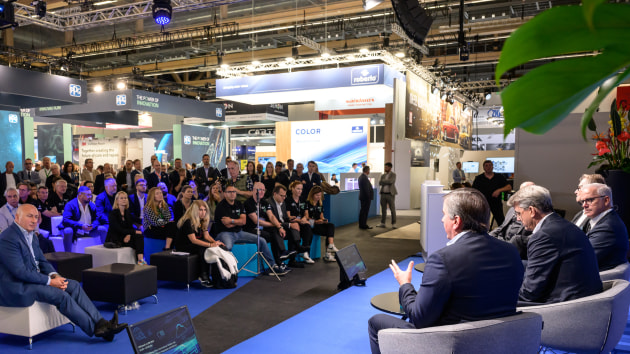
Rising repair costs and growing pressure on insurers, OEMs and repairers were front and centre at a recent industry roundtable in Germany, with calls for a more joined-up, digital approach to claims management.
The “Potential on offer in accident repair management” dialogue, hosted by the Association of International Motor Vehicle Manufacturers (VDIK) and Automechanika Frankfurt, brought together insurers, carmakers and service providers to tackle a problem that’s not unique to Europe.
According to the DAT Report 2026, more than 77 per cent of motorists are unsure whether they will be able to afford personal mobility in the future, with maintenance and repair costs a key concern. Increasing vehicle complexity and rising labour costs are pushing repair bills higher—contributing to an ageing car parc and more vehicles going unrepaired after accidents.
VDIK President Imelda Labbé said the cost pressure is being felt across the board. OEMs rely on parts and labour revenue to help fund the transition to new technologies, while insurers are seeing claims costs rise sharply, putting pressure on profitability and driving premium increases.
Despite efforts within individual businesses, speakers agreed there has been little coordinated action across the industry.
That’s where the idea of a digital claims management ecosystem comes in.
Presentations from Volkswagen Group and Deutsche Automobil Treuhand (DAT) highlighted how better data integration across the repair process—from first notice of loss through to the workshop—can already deliver efficiencies and cost savings.
Karsten Crede, managing partner at Crede & Company, said closer collaboration between sectors will be critical. “A digital claims management ecosystem offers a possible solution… creating the basis for customer-friendly and sustainable automotive insurance in the future,” he said.
Fixico’s chief commercial officer Frans Ditmer pointed to shared KPIs such as repair time, cost control and quality as a way of aligning insurers, OEMs and repairers.
There was no shortage of pain points identified—delays caused by parts shortages, gaps in repair information, rental car costs and fragmented processes all came under scrutiny. A common theme was speed: faster decision-making and better coordination across the supply chain were seen as the quickest wins when it comes to reducing costs.
Another area flagged was the potential for insurers and manufacturers to work more closely on vehicle data, including refining insurance categories based on information available at the design stage.
The conversation is set to continue at Automechanika Frankfurt, which runs from 8–12 September. Collision repair will again feature on the agenda, including a dedicated “Collision Talk” session covering automation, consolidation and robotics in the sector.
While the discussion was European-focused, the themes will be familiar to Australian repairers—particularly as cost pressures, insurer dynamics and increasing vehicle complexity continue to reshape the local market.