

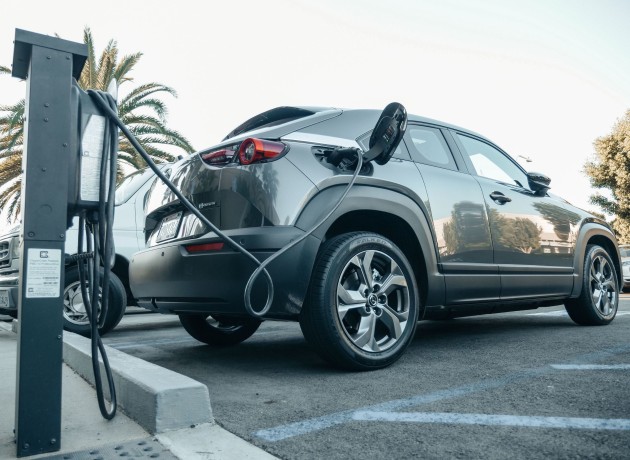
Fresh national polling has found that scrapping the federal government’s Electric Car Discount would hit financially stretched households, blue-collar workers and outer suburban Australians the hardest, challenging perceptions that the scheme mainly benefits wealthy inner-city drivers.
The research, commissioned by the National Automotive Leasing and Salary Packaging Association (NALSPA) and conducted by RedBridge Group in March and April 2026, surveyed 2,269 novated leaseholders across Australia in what is being described as the largest study of its kind. It found the Fringe Benefits Tax exemption for eligible electric vehicles is a major cost-of-living measure for many families considering the switch from petrol and diesel vehicles.
According to the findings, 84 per cent of respondents nationally said the Electric Car Discount was “very important” in their decision to purchase an EV. That figure rose significantly among households under financial pressure, with 93 per cent of those experiencing high financial stress saying the discount was crucial, compared with 79 per cent of those under no financial stress.
Blue-collar workers also showed stronger reliance on the policy, with 87 per cent rating it as very important compared with 81 per cent of clerical workers. Among households where a language other than English is spoken at home, support rose to 90 per cent, while outer suburban residents recorded 86 per cent compared with 82 per cent in inner metro areas.
Cost savings were identified as the primary motivation for switching to EVs, with 57 per cent ranking the discount among their top three reasons for purchase. Overall, 60 per cent of Australians surveyed said they would not have bought their EV without the Electric Car Discount.
That figure climbed to 72 per cent among financially stretched households, 66 per cent for non-English-speaking households, 65 per cent for blue-collar workers and 61 per cent for those living in outer suburbs.
NALSPA CEO Rohan Martin said the findings debunked the idea that the EV Discount was simply a tax break for affluent Australians.
“This data completely overturns the idea that the EV Discount is a tax break focused on wealthy, inner-city elites,” Martin said.
“The people relying on the EV Discount the most are outer-suburban families, blue-collar workers, culturally and linguistically diverse communities, and households under real financial pressure who want to reduce their weekly costs.”
He said removing the discount would likely force many families back into petrol and diesel vehicles, extending exposure to fuel costs.
Nearly half of respondents said they would defer their next car purchase if the discount was removed, while 24 per cent said they would revert to petrol or diesel vehicles. That figure rose to 34 per cent among blue-collar workers and 36 per cent among financially stressed families.
Support for the policy was also found to span the political spectrum, with 91 per cent of respondents agreeing it was important for the federal government to provide financial support to help Australians transition to EVs, including strong backing from Labor, Coalition, Greens and One Nation voters.
NALSPA said the findings reinforced the Electric Car Discount’s importance not only for household budgets, but also for Australia’s broader transport decarbonisation and energy security goals.