

In case you missed this article in the March/April issue - we talk to two insurers about their ESG policies and what they expect from their supply chain.
Environmental Social Governance (ESG) is working its way into contracts as corporations begin to work towards net zero and ensure their supply chain follows suit.
ESG policies are about making a fairer, safer world for everyone – in essence being a responsible global citizen. As Australian corporates fine tune their ESG policies, their requirements will, and in some cases already have, cascaded down their supply chains.
Most corporates are currently trying to get their own houses in order, which will allow smaller businesses time to prepare for when those corporates want their supply chain’s houses in order too. They also have a lot of work to undertake in order to understand how their supply chains operate and to create appropriate measuring and reporting matrixes for compliance policies.
What does it mean for collision repairers? If you are part of an insurer network or have an OEM approval or work for a large fleet company then you may have already had to tick some ESG boxes.
Paint & Panel talked to Aleena Dewji, manager, climate change and Adele Jin, principal, supply chain, sustainability and governance at IAG to find out what is expected now and what is in the works. It stands to reason that whatever the biggest insurers do, the rest are likely to follow.
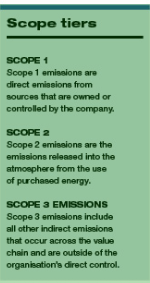
Dewji’s key role is to support the development, implementation and ongoing governance of IAG’s climate action plan, which includes all of the emission reduction targets. She’s also an expert on Scope 3 emissions and supports their businesses with target setting and developing IAG’s approach to decarbonise.
IAG published a new version of its Climate Action Plan in August last year. “Having a plan that looks at climate but also supports emissions reductions as well as building disaster resilience is really core to our business,” Dewji says.
IAG has been measuring its emissions for over 10 years. It also operates in New Zealand where there is more advanced climate control legislation and will have to report its supply chain emissions there sooner than it will in Australia.
“When we developed our new climate action plan, we put a lot of thought into how we can continue to support the important transition towards a low-emissions economy,” Dewji says.
There are three pillars to IAG’s climate plan. The first is essentially getting its own house in order and ensuring that every aspect of its own business that it can directly control is as sustainable as possible. The second pillar is all about supporting its value chain. In the collision repair industry that’s its full supply chain or procurement supply chain, its partners and brokers.
“A part of our climate action plan, the second pillar is all about how we can support our value chain in the transition towards a net zero economy. Whether that's through continued engagement or education opportunities or advocacy or influencing in those areas,” Dewji says.
Jin explains the challenge for insurers. “What a lot of the insurers are struggling with right now is to understand supply chain emissions. What is the baseline? There are quite a few steps to get there to see how we can support suppliers to reduce it.
“First, we need to understand it, so we need data that will allow us to benchmark. Let’s say we have a list of 20 top providers, how do they compare with one another? Before we insist that they transition their fleet or install solar for instance, is there anything in their current business process that can be fine-tuned to reduce their carbon emissions?”
Jin explains that by identifying best practice – whether that is using fast drying primers or installing LED lights – and sharing those best practices they can educate and guide their supply chain first, instead of mandating practices.
Here’s where carbon emission reporting is essential and will, in the future, be a practice that the vast majority of repairers will have taken part in and therefore have the means to do so.
“Up until now we've used a proxy-based methodology to understand what those emissions are based on dollar spend. There's a lot of different assumptions that go into the baseline that we’ve created, but the only way that we’ll ever see a reduction of emissions or understand what’s happening on an industry level basis is to get actual data from our suppliers. So, it's about working with that supply chain to start to understand how they can measure their own data better and to understand what they need to do to give us the data that will support us as well,” Dewji says.
IAG has already developed an ESG questionnaire, currently in the throes of being updated, that most of the IAG contracted suppliers are required to complete as part of their onboarding process. These include questions such as: What processes do you have in place to manage the environmental impact of your business and supply chain? Is your business certified or registered as a diverse business and to list diverse suppliers. There are questions about mitigating modern slavery risks. It asks about staff wellbeing in terms of mechanisms to raise concerns about workplace grievances.
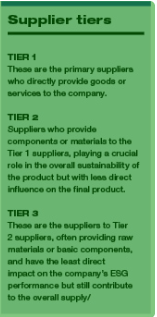
There are also ESG requirements in IAG’s supplier Code of Conduct. These include care of the environment, ensuring a safe and inclusive workplace and risk management.
IAG’s medium-term strategy is concentrating on its operational emissions up to 2030 and Dewji says this will be common to insurers across the board.
The Government has instituted mandatory climate reporting which was introduced for Group 1 last year (companies with a consolidated revenue of $500M or more).
Group 2 is due to report from 1 July 2026. That will be for companies with $200 million consolidated revenue or gross assets of $500 million.
It’s Group 3 where the reporting will affect a lot more of the collision industry. From 1 July 2027 companies with revenue of $50 million (assets of $25 million) or more will have to report their carbon emissions and that will take the vast majority of MSOs.
Repairers don’t have to worry that reporting requirements will change suddenly. IAG and other insurers will run pilot schemes in order to ensure the most effective compliance procedures – we can only hope that they collaborate and come up with a universal measuring system. However, if a business is already progressive and can demonstrate that it has ESG elements in place, it will score higher than others when it comes to being offered contracts – and that’s not just from insurers but other work providers such as local councils, Government departments, OEMs and fleets.
Paint & Panel reached out to global insurer Allianz for its positioning on ESG. A company spokesperson said: “Allianz Australia is investigating the addition of ESG requirements into the onboarding process for our motor repair network.
“Several initiatives are currently underway at Allianz Australia in the motor repair space, with the aim of reducing environmental impact and promoting a circular economy.
“Allianz works with motor assessors, repair groups, salvage businesses, and recycled parts businesses to develop solutions for sustainable practices in the motor claims life cycle.
This includes:
Targets for the use of recycled parts in the motor claims space. These targets have been in place since 2023.
Using desktop assessment data to handle motor claims remotely, where possible. Digital assessments reduce the need for assessors to drive, which in turn minimises company fleet emissions.
Understanding which suppliers support sustainable practices, including energy efficiency and waste management. With this information, we will share case studies that highlight good sustainable practices with suppliers.
“At a global level, Allianz Group is currently undertaking a project that focuses on ESG assessments for all claims suppliers, including motor retail. The aim of this assessment is for Allianz to be able to rate suppliers against ESG initiatives and where possible, provide capability uplift for those suppliers that are early in their ESG initiative journey and support those with high ratings as leading examples.
“ESG considerations are a significant focus for both Allianz Australia and the broader Allianz Group globally. Allianz is working to integrate sustainability across its business and operations.
“Allianz Australia is committed to contributing positively to society and the environment while maintaining strong governance practices. This approach not only aligns with global sustainability goals but also aims to meet the growing expectations of customers, investors, and other stakeholders for responsible business practices.
“Each Allianz operating entity is at a different phase in their motor repair journey when it comes to Sustainability.

For example, Allianz UK refreshed its fleet policies in March 2023, updating wording to facilitate greater uptake of OEM green parts that aren’t older than the part it’s replacing.
In the UK, green parts are increasing in availability and a way in which repairers can source parts quickly is through a digital platform. The platform also enables companies to measure and report emissions and carbon savings they have achieved by using green parts, which can support their own ESG reporting.
There will be many industry challenges ahead as government regulations are developed to achieve its net zero target for Australia by 2050. No doubt there the journey will be fraught with bumps in the the road and U-turns. The Victorian Government’s recently announced Building Electrification Regulatory Impact Statement would mean that all repairers would have to use electric spray booths instead of gas – that’s a lot of electricity when many businesses are already struggling to get enough power, not to mention electric booth technology is still relatively in its infancy. ●
 At a global level, Allianz Group is currently undertaking a project that focuses on ESG assessments for all claims suppliers, including motor retail.