

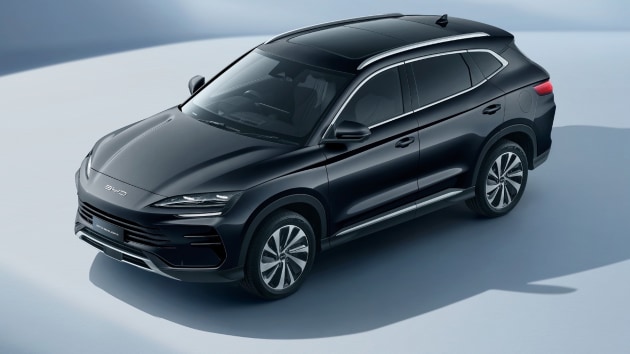
Chinese electric vehicle manufacturer BYD has unveiled a new fast-charging system and updated battery technology that could reshape competition in the global EV market, according to analysis from GlobalData.
The company’s second-generation Blade Battery, combined with its new FLASH Charging architecture, is claimed to recharge from 10 per cent to 70 per cent in just five minutes, reaching as much as 97 per cent charge in approximately nine minutes.
BYD also plans to support the technology with a major infrastructure rollout. The company has outlined plans to deploy around 20,000 FLASH charging stations across China during 2026, with international expansion expected to follow.
GlobalData believes the strategy reflects a shift in the competitive battleground for electric vehicles.
Rather than focusing primarily on design, software features or brand positioning, the market may increasingly differentiate around battery engineering and charging ecosystem capability.
“Ultimately, this could reshape competitive differentiation in the EV market away from brand and design toward engineering and charging ecosystem depth,” GlobalData said in its analysis.
The battery technology itself is designed to address several persistent EV adoption barriers. BYD claims the new Blade Battery demonstrates minimal performance degradation in extreme cold conditions while supporting ultra-fast charging cycles. The charging system also features a redesigned, lighter FLASH charger with what the company describes as a T-shaped zero-gravity connector intended to simplify operation.
The announcement comes as China’s EV market begins showing signs of slowing after years of rapid expansion.
According to GlobalData, retail sales of new-energy vehicles in China fell nearly 20 per cent year-on-year in January 2026 – the first decline of that scale since early 2024.
GlobalData senior automotive analyst Madhuchhanda Palit said the slowdown reflects a combination of disappearing tax incentives, reduced trade-in subsidies and intensifying competition between domestic manufacturers.
“Disappearing tax exemptions, fading trade-in subsidies, and heightened competition among domestic automakers have contributed to shrinking demand and increased margin pressure,” Palit said.
For BYD, exports remain a key growth opportunity, while new charging and battery technology could help address lingering consumer concerns around charging time, range and cold-weather performance.
Palit suggested that if such technologies deliver reliable real-world performance, they may shift buying decisions toward core EV engineering capabilities rather than software features or luxury appointments.
“In turn, automakers that cannot match both battery performance and supporting infrastructure may lose ground,” she said.
GlobalData believes that by combining battery innovation with large-scale charging infrastructure deployment, BYD may be attempting to set a new benchmark for EV usability and convenience in both domestic and international markets.