

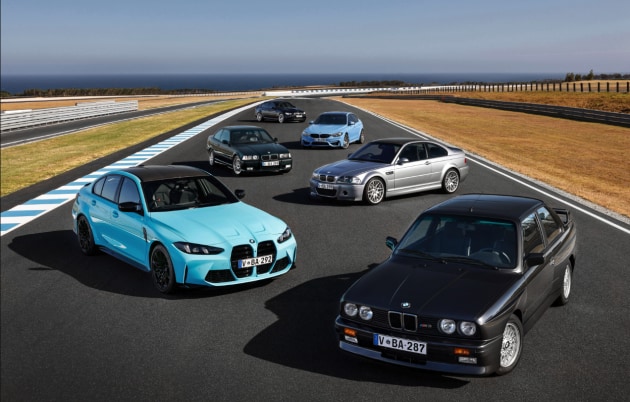
Since its 1986 debut, the M3 has evolved through multiple body styles including coupe, sedan, convertible and touring, with each generation refining its styling, materials and structural approach. From the flared arches of the original E30 to today’s sharper lines and lightweight carbon components, the focus has always been on balancing form and function. It's a homologation car intended for the the racetrack.
Every generation has played with shape, materials and stance — from bolt-on arches to carbon roofs — but the formula hasn’t strayed far from “practical car, turned up a notch.” In Australia, the M3 has built a strong following, accounting for over 40% of BMW M sales locally. Its influence has extended beyond the road, with strong ties to motorsport and even localised models like the rare M3 R. Australia sits among BMW’s strongest markets for M cars overall, ranking as high as fourth globally for M-car share of total sales.
More recent generations have introduced advanced materials, improved chassis dynamics and new production techniques, while maintaining the core M3 formula. The latest models also bring increased personalisation and technology integration.
Looking ahead, the next generation will introduce an electric version for the first time, alongside a continued petrol offering—highlighting BMW’s multi-path approach to future mobility.
Forty years on, the M3 remains a benchmark not just for performance, but for how design, engineering and usability come together in a single package.